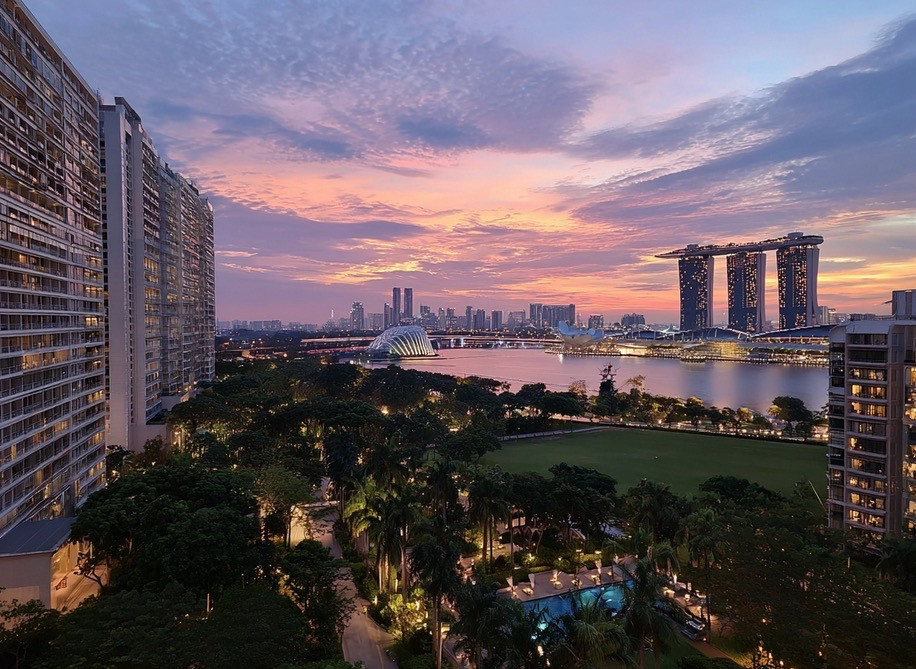
Buying a Condo in Singapore: A Comprehensive Guide for Foreigners
Singapore, a bustling global hub renowned for its economic stability, political transparency, and high quality of life, has consistently attracted international investors and expatriates seeking a vibrant place to live and work. For foreigners considering making Singapore their long-term home or a strategic investment location, buying a condominium presents an attractive opportunity. However, navigating Singapore’s property market as a non-citizen comes with specific regulations, restrictions, and costs that differ significantly from those faced by locals.
This comprehensive guide aims to demystify the process, providing a step-by-step roadmap for foreigners looking to purchase a condominium in the Lion City.
1. Why Singapore? The Allure for Foreign Buyers
Before diving into the specifics, it’s essential to understand why Singapore remains a top choice for foreign property investment:
- Economic Stability: A robust economy, strong currency, and consistent GDP growth provide a secure environment for investments.
- Political Stability & Transparency: A highly transparent legal system and a corruption-free environment instill confidence in investors.
- High Quality of Life: Excellent infrastructure, world-class healthcare, education, and a low crime rate contribute to an enviable lifestyle.
- Strategic Location: A gateway to Asia, offering unparalleled connectivity and business opportunities.
- Strong Rental Yields: A large expatriate population ensures a steady demand for rental properties, offering attractive yields for investors.
- Potential for Capital Appreciation: Historically, Singapore’s property market has shown resilience and long-term growth.
2. Eligibility & Restrictions: What Foreigners Can (and Cannot) Buy
This is the most critical starting point for any foreigner considering property in Singapore. Unlike citizens or permanent residents (PRs), foreigners face strict limitations on the types of residential properties they can acquire.
What Foreigners CAN Buy Without Special Approval:
- Condominium units: This includes private apartments and condominium units, which are typically found in high-rise developments with shared facilities like swimming pools, gyms, and security.
- Strata-titled landed homes within approved condominium developments: These are landed properties that are part of a larger condominium project, sharing common facilities and a single land title.
What Foreigners CANNOT Buy (or Require Special Approval):
- HDB (Housing & Development Board) flats: These are public housing units reserved for Singapore citizens and, in some cases, Singapore Permanent Residents (SPR) under specific eligibility criteria.
- Landed properties (detached, semi-detached, terrace houses): Generally, foreigners are restricted from owning landed residential properties.
- Exception: Foreigners may apply for approval from the Land Dealings (Approval) Unit (LDAU) of the Singapore Land Authority (SLA) to purchase landed property. Approval is typically granted only to those who make an exceptional economic contribution to Singapore and intend to occupy the property for their own use, not for investment. The property must also be non-sentosa.
- Shophouses (residential component): Specific restrictions apply.
- Executive Condominiums (ECs): These are a hybrid of public and private housing. Foreigners can only purchase ECs on the resale market after a 10-year period from the date of Temporary Occupation Permit (TOP) or Certificate of Statutory Completion (CSC), whichever is earlier.
Key Takeaway: For most foreign buyers, a private condominium unit is the most viable and straightforward option.
3. Types of Condominiums: New Launch vs. Resale
Once you’ve confirmed your eligibility, you’ll encounter two main categories of condominiums:
A. New Launch Condominiums (Under Construction/Recently Completed)
- Pros:
- Brand New: Enjoy modern designs, facilities, and the latest smart home technology.
- Progressive Payment Scheme: Payments are spread out according to construction milestones, easing the financial burden initially.
- Potential for Appreciation: Some believe there’s a "first-mover advantage" as prices may appreciate upon completion.
- Developer Discounts: Developers may offer early bird discounts or incentives.
- Warranty: Comes with a defect liability period from the developer.
- Cons:
- Waiting Time: You’ll need to wait for construction to complete, which can be several years.
- Showflat vs. Reality: While showflats provide a good indication, the actual unit might differ slightly.
- Limited Negotiation: Prices are generally set by the developer, with less room for negotiation.
B. Resale Condominiums (Completed & Previously Occupied)
- Pros:
- Immediate Occupation: You can move in or rent out the unit almost immediately after completion of sale.
- Tangible Viewings: You can view the actual unit, assess its condition, and understand its surroundings, views, and exact layout.
- Established Amenities: Facilities and surrounding infrastructure (schools, malls, transport) are already in place.
- Negotiation Potential: More room for price negotiation with the seller.
- Cons:
- Older Condition: May require renovation or maintenance work.
- Higher Upfront Costs: Full payment or a larger down payment is typically required much sooner.
- Design & Layout: May not feature the latest designs or smart home technology.
4. The Buying Process: A Step-by-Step Guide for Foreigners
Navigating the Singapore property market requires a structured approach. Here’s a typical process:
Step 1: Research & Financial Planning
- Determine Your Budget: Beyond the purchase price, factor in stamp duties, legal fees, agent commissions, and potential renovation costs.
- Understand Loan Eligibility: Consult banks to get an Indicative Loan Quantum (ILQ) or Approval-In-Principle (AIP). This will tell you how much you can borrow, crucial for setting your budget. Banks will assess your income, credit history, and existing debts.
- Assess Total Debt Servicing Ratio (TDSR): This regulation limits the amount individuals can borrow for property loans, ensuring total monthly debt repayments do not exceed 55% of your gross monthly income. For foreigners, this is a key hurdle.
- Factor in Additional Buyer’s Stamp Duty (ABSD): As of April 27, 2023, foreigners purchasing any residential property in Singapore are subject to an ABSD of 60% of the property’s purchase price or market value (whichever is higher). This is a significant cost.
Step 2: Engage a Property Agent
While not mandatory, a good property agent is invaluable, especially for foreigners unfamiliar with the local market and regulations.
- Local Expertise: They understand market trends, property values, and upcoming developments.
- Regulatory Knowledge: They can guide you through the complex legal and financial aspects.
- Negotiation Skills: They represent your interests during price negotiations.
- Time-Saving: They can shortlist properties and arrange viewings based on your criteria.
Step 3: Property Search & Viewings
Based on your budget, preferences (location, size, facilities), and the agent’s advice, start viewing properties. Be clear about your priorities.
Step 4: Make an Offer & Obtain Option to Purchase (OTP)
- Letter of Offer: Once you find a suitable property, your agent will help you draft a Letter of Offer, outlining your proposed price and terms.
- Option to Purchase (OTP): If the seller accepts, they will grant you an OTP in exchange for an Option Fee, typically 1% of the purchase price. The OTP is a legal document that reserves the property for you for a specific period (usually 14 days, though negotiable). During this period, the seller cannot offer the property to anyone else.
Step 5: Engage a Conveyancing Lawyer
Immediately after securing the OTP, engage a conveyancing lawyer. They will:
- Conduct Due Diligence: Perform property title searches and ensure there are no legal encumbrances.
- Review Legal Documents: Explain the terms and conditions of the OTP and Sale & Purchase Agreement.
- Facilitate the Transaction: Handle all legal aspects of the transfer of ownership.
Step 6: Exercise the Option
- Within the option period (e.g., 14 days): You must decide whether to proceed with the purchase.
- Exercising the OTP: If you proceed, your lawyer will help you sign the Sale & Purchase Agreement and pay the Exercise Fee, typically 4% of the purchase price (minus the 1% Option Fee already paid), bringing the total down payment to 5%.
Step 7: Secure Financing
- Loan Application: Submit your formal loan application to the bank(s) you’ve consulted.
- Valuation: The bank will arrange for a property valuation to determine the maximum loan quantum.
- Loan-to-Value (LTV) Limits: For foreigners, the maximum LTV for a first housing loan is generally 75% of the property’s value or purchase price (whichever is lower). For subsequent loans, this limit decreases.
Step 8: Pay Stamp Duties
This is a significant financial commitment. Your lawyer will advise you on the exact amounts and deadlines.
- Buyer’s Stamp Duty (BSD): Payable by all buyers, calculated on a tiered basis on the purchase price or market value, whichever is higher.
- 1st S$180,000: 1%
- Next S$180,000: 2%
- Next S$640,000: 3%
- Remaining amount: 4%
- Additional Buyer’s Stamp Duty (ABSD): As mentioned, foreigners pay 60% of the purchase price or market value (whichever is higher). This is in addition to the BSD.
Example Calculation (Simplified):
If a foreigner buys a condo for S$2,000,000:
- BSD: Approximately S$64,600
- ABSD: 60% of S$2,000,000 = S$1,200,000
- Total Stamp Duties: S$1,264,600
Note: Stamp duties must be paid within 14 days of exercising the OTP if the document is signed in Singapore, or within 30 days of its receipt if signed overseas.
Step 9: Completion of Sale
- Balance Payment: The remaining balance of the purchase price (usually 75% if you have a 75% loan) is paid through your bank loan.
- Key Handover: Upon completion, typically 8-12 weeks after exercising the OTP, the keys are handed over, and the property officially becomes yours. Your lawyer will register the transfer of ownership with the Singapore Land Authority (SLA).
5. Key Costs Involved (Beyond Purchase Price)
To reiterate and summarize, here are the main costs:
- Purchase Price: The agreed price of the property.
- Option Fee: 1% of the purchase price.
- Exercise Fee: 4% of the purchase price.
- Buyer’s Stamp Duty (BSD): Tiered, up to 4%.
- Additional Buyer’s Stamp Duty (ABSD): 60% for foreigners (as of April 27, 2023).
- Legal Fees: Typically S$2,500 – S$6,000+, depending on the property value and law firm.
- Valuation Fee: If taking a loan, the bank requires a valuation, costing S$200 – S$500+.
- Property Agent Commission: In Singapore, the seller usually pays the agent commission. However, if you engage a buyer’s agent, you may need to pay their commission (typically 1% of the purchase price, but negotiable).
- Bank Loan Charges: Processing fees, fire insurance (mandatory for mortgaged properties).
- Annual Property Tax: Calculated based on the Annual Value (AV) of the property. For owner-occupied properties, residential property tax rates range from 0% to 16%. For non-owner-occupied properties (i.e., rented out), rates range from 12% to 36%.
- Maintenance Fees: Monthly fees for the upkeep of common facilities, varying by development size and facilities (S$200 – S$1,000+ per month).
- Home Insurance: Highly recommended.
6. Important Considerations for Foreigners
- Exchange Rate Fluctuations: If your funds are in a foreign currency, exchange rate movements can impact your purchasing power and eventual returns.
- Long-Term Strategy: Are you buying for own-stay, investment, or both? Your strategy will influence your property choice.
- Exit Strategy: Consider the resale market and potential capital gains tax (though Singapore does not have a capital gains tax on property, specific rules apply for property companies).
- Permanent Residency (PR) Status: If you obtain PR status within 3 years of purchasing a property and you are the only owner, you may be eligible to apply for an ABSD remission. This is a complex area and requires specific conditions to be met, so consult with your lawyer.
- Cultural & Market Nuances: Singapore’s property market is highly regulated and unique. Local knowledge is invaluable.
- Trustee Ownership: Foreigners cannot hold property in trust without prior approval from the Controller of Residential Property.
7. Post-Purchase: What’s Next?
- Utilities: Set up electricity, water, gas, and internet accounts.
- Renovations: If required, engage reputable interior designers or contractors.
- Renting Out: If you plan to rent out your property, understand tenancy agreements, landlord responsibilities, and tax implications on rental income. You’ll need to declare rental income to the Inland Revenue Authority of Singapore (IRAS).
- Property Management: Consider hiring a property manager if you’re not residing in Singapore or prefer not to handle day-to-day tenant issues.
Conclusion
Buying a condominium in Singapore as a foreigner is a significant investment that requires careful planning, a clear understanding of local regulations, and substantial financial commitment, particularly with the high Additional Buyer’s Stamp Duty. However, for those who navigate the process diligently, the rewards can be substantial, offering a stake in one of the world’s most dynamic and stable real estate markets.
Engaging experienced professionals – a reputable property agent, a reliable conveyancing lawyer, and a financial advisor – is not just recommended but essential. Their expertise will ensure a smooth, compliant, and ultimately successful property acquisition journey in Singapore. With thorough preparation and the right guidance, your dream of owning a piece of this vibrant city can become a reality.