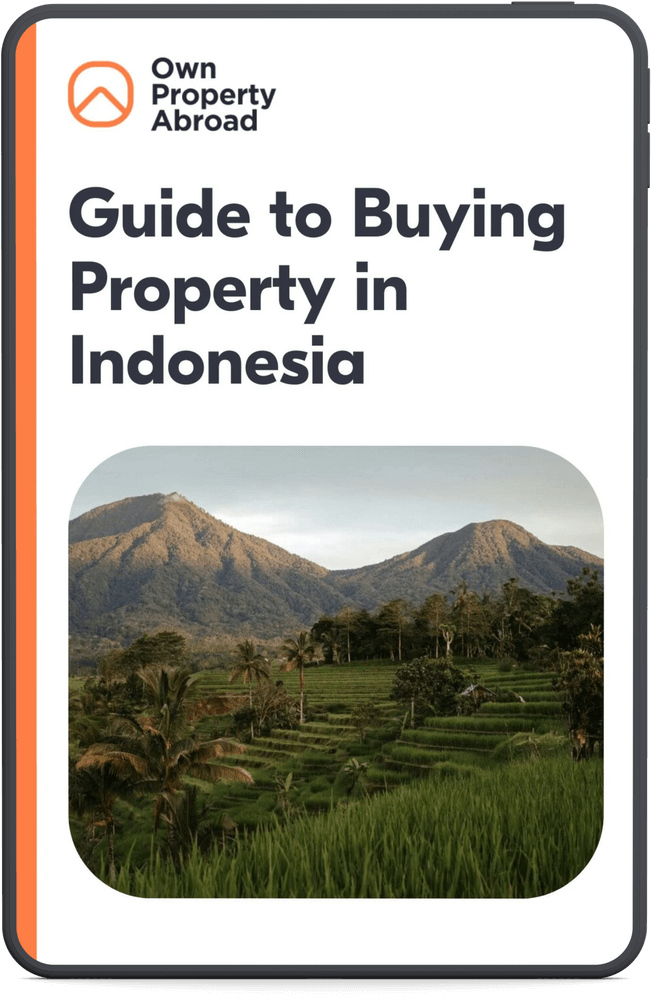
Indonesia Property Investment Guide: Unlocking Opportunities in Southeast Asia’s Powerhouse
Indonesia, an archipelago of over 17,000 islands and the world’s fourth most populous nation, stands as a vibrant economic powerhouse in Southeast Asia. With a rapidly expanding middle class, robust economic growth, and an ever-increasing appetite for development, its property market offers compelling opportunities for both seasoned and novice international investors. From the bustling metropolis of Jakarta to the serene beaches of Bali, Indonesia presents a diverse landscape for property investment.
This comprehensive guide aims to equip potential foreign investors with the knowledge needed to navigate the Indonesian property market successfully. We will delve into the compelling reasons to invest, the types of properties available, key regions, the critical legal framework for foreign ownership, the investment process, associated costs and taxes, potential risks, and essential tips for success.
Why Invest in Indonesian Property? A Confluence of Growth Drivers
Indonesia’s appeal as a property investment destination stems from several powerful macro and microeconomic factors:
- Robust Economic Growth: Indonesia boasts one of the largest economies in Southeast Asia, consistently demonstrating GDP growth rates above 5% in recent years (pre-pandemic), with strong recovery trajectories. This sustained economic expansion fuels demand across all property sectors.
- Favorable Demographics: With a population exceeding 270 million, predominantly young and urbanizing, Indonesia offers a massive domestic market. The burgeoning middle class, with increasing disposable income, drives demand for modern housing, commercial spaces, and leisure facilities.
- Rapid Urbanization: Millions of Indonesians are migrating from rural areas to cities in search of better economic opportunities. This rapid urbanization creates an immense need for new residential, commercial, and retail properties in major urban centers.
- Booming Tourism Sector: Destinations like Bali, Lombok, and Labuan Bajo continue to attract millions of international tourists annually. This robust tourism industry translates into high demand for hospitality properties, villas, and short-term rental accommodations, offering attractive rental yields.
- Infrastructure Development: The Indonesian government has embarked on ambitious infrastructure projects, including new toll roads, airports, seaports, and public transportation networks (e.g., Jakarta MRT, LRT). These developments significantly enhance connectivity, boost regional economies, and increase property values in surrounding areas.
- Government Reforms & Foreign Investment Push: Recent regulatory reforms, particularly the Omnibus Law on Job Creation, aim to simplify bureaucracy, streamline licensing, and enhance the ease of doing business for foreign investors. These reforms signal a strong government commitment to attracting foreign capital, including in the property sector.
- Potential for Capital Appreciation: Historically, properties in prime Indonesian locations have shown significant capital appreciation, especially during periods of strong economic growth. Early investment in emerging areas, backed by infrastructure development, can yield substantial returns.
- Attractive Rental Yields: Depending on the location and property type, investors can often find properties offering competitive rental yields, particularly in popular tourist destinations and high-demand urban centers.
Types of Property & Investment Strategies
The Indonesian property market offers a diverse range of investment opportunities:
- Residential Properties:
- Apartments/Condominiums (Rumah Susun): Especially popular in major cities like Jakarta, Surabaya, and Bandung. These cater to urban professionals and expatriates.
- Houses/Villas: Ranging from traditional Indonesian homes to luxury villas, particularly sought after in tourist hotspots like Bali for both residential and rental purposes.
- Land Banking: Purchasing undeveloped land with the expectation of future appreciation, often due to planned infrastructure or urban expansion.
- Commercial Properties:
- Office Spaces: High demand in central business districts (CBDs) of major cities, driven by multinational corporations and local businesses.
- Retail Spaces: Shopping malls, retail complexes, and shophouses (ruko) thrive with the growing consumer market.
- Hospitality Properties:
- Hotels/Resorts: Direct investment in established or new hotels, particularly in tourist-centric regions.
- Guesthouses/Homestays: Smaller-scale accommodations, often popular in areas frequented by backpackers or budget travelers.
- Industrial Properties:
- Warehouses & Factories: Located in industrial estates near major ports and logistical hubs, catering to manufacturing and logistics companies.
Investment Strategies:
- Buy-to-Let: Purchasing properties for long-term rental income.
- Short-Term Rentals: Leveraging platforms like Airbnb for tourist accommodations (especially popular in Bali).
- Property Flipping: Buying properties, renovating them, and selling for a quick profit (requires local expertise and market timing).
- Off-Plan Purchases: Buying properties under construction, often at lower prices, with the potential for appreciation upon completion.
Key Regions to Consider for Investment
Indonesia’s vast geography means diverse market dynamics across different regions:
- Jakarta: The bustling capital and economic heart. Offers high demand for luxury apartments, office spaces, and commercial properties. Investment here is typically driven by corporate tenants and a large expatriate community. Rental yields can be attractive, and capital appreciation is steady in prime locations.
- Bali: The undisputed tourism gem. Known for luxury villas, boutique hotels, and guesthouses. Strong demand for short-term rentals. Areas like Seminyak, Canggu, Ubud, and Uluwatu are perennial favorites, but new areas are emerging. Investment here is heavily influenced by tourism trends and lifestyle appeal.
- Surabaya: East Java’s provincial capital, a major port city, and industrial hub. Offers a strong local economy, robust manufacturing sector, and growing middle class. Attractive for residential and commercial properties catering to local businesses and families.
- Bandung: West Java’s capital, known for its creative industries, fashion, and education. Popular weekend getaway from Jakarta. Offers opportunities in residential, retail, and hospitality sectors.
- Medan: North Sumatra’s largest city, a trade and business hub. Strategic location for agribusiness and manufacturing. Offers opportunities in residential and commercial sectors.
- Lombok & Labuan Bajo: Emerging tourism destinations with significant government investment in infrastructure (e.g., Mandalika Special Economic Zone in Lombok). Offer high potential for capital appreciation in hospitality and residential properties, similar to Bali’s early growth stages.
The Legal Framework for Foreign Property Ownership: A Critical Overview
This is arguably the most complex and crucial aspect for foreign investors in Indonesia. Unlike many Western countries, direct freehold ownership (Hak Milik) of land is generally not permitted for foreign individuals. However, various mechanisms allow foreigners to acquire property rights:
-
Hak Pakai (Right to Use):
- This is the most common right for foreign individuals. It grants the right to use and/or collect produce from land for a specific period.
- Duration: Initially granted for 30 years, extendable for another 20 years, and then renewable for another 30 years (total 80 years).
- What it covers: Can be used for residential houses, apartments (strata title on specific luxury categories), or offices.
- Key point: While it’s a strong right, it’s not freehold. The property remains under the underlying Hak Milik (freehold) of an Indonesian citizen or entity, or state land. Foreigners can hold Hak Pakai over Hak Milik or Hak Guna Bangunan land.
-
Hak Guna Bangunan (HGB – Right to Build):
- This right allows an individual or entity to construct and own buildings on land owned by another party (e.g., state land, Hak Milik land).
- Duration: Initially granted for 30 years, extendable for 20 years, and then renewable for another 30 years (total 80 years).
- Who can hold it: Indonesian citizens and legal entities established under Indonesian law, including foreign-owned companies (PT PMA). This is the primary route for foreign corporate entities to acquire significant property assets.
- Relevance for foreigners: If you set up a PT PMA, this company can hold HGB rights, effectively allowing you to control and develop properties through your Indonesian entity.
-
Leasehold (Hak Sewa):
- This involves a private agreement between a landowner (Indonesian citizen) and a foreign individual or entity to lease a property for a specific period.
- Duration: Typically 25-30 years, often with options to extend.
- Common in: Bali for villas, where foreigners lease land and build properties or lease existing properties.
- Key point: It’s a contractual agreement, not a registered land right in the same way as Hak Pakai or HGB. Due diligence on the lease agreement and landowner is paramount.
-
PT PMA (Penanaman Modal Asing – Foreign Investment Company):
- For substantial investments, establishing a PT PMA is often the most secure and recommended route for foreign investors.
- A PT PMA is an Indonesian legal entity fully or partially owned by foreign capital. This company can then acquire property rights (primarily HGB) in its own name.
- Benefits: Offers a higher degree of security, clarity, and control compared to individual ownership or informal arrangements. It also allows for multiple property acquisitions and business operations.
-
Nominee Arrangements (HIGHLY DISCOURAGED!):
- Historically, some foreigners attempted to bypass ownership restrictions by registering properties in the name of an Indonesian citizen (a "nominee") under a private agreement.
- Risks: This practice is illegal and extremely risky. Nominee agreements are generally unenforceable in Indonesian courts. The nominee can legally claim full ownership, leaving the foreign investor with no legal recourse and potentially losing their entire investment. Avoid at all costs.
Recent Developments (Omnibus Law): The Omnibus Law on Job Creation (2020) aimed to simplify foreign ownership regulations, reaffirming and somewhat clarifying the Hak Pakai and Hak Guna Bangunan rights for foreigners and foreign-owned companies, and extending the potential duration. However, the fundamental principle of no direct individual freehold remains.
The Investment Process: Step-by-Step Guide
Navigating the property acquisition process requires diligence and local expertise:
- Market Research & Due Diligence:
- Identify your investment goals, budget, and target regions.
- Research market trends, rental yields, and growth potential.
- Crucially, engage a reputable local lawyer or legal consultant specializing in property law for foreigners.
- Property Search:
- Utilize local real estate agents, online property portals, and developer showrooms.
- Always inspect the property in person.
- Preliminary Checks (Legal & Financial):
- Verify the property’s legal status: Check the land certificate (Sertifikat Tanah) for its type (Hak Milik, HGB, Hak Pakai) and ownership details.
- Ensure the property has a valid Building Permit (IMB – Izin Mendirikan Bangunan).
- Check for any encumbrances, disputes, or zoning restrictions.
- Verify outstanding property taxes (PBB – Pajak Bumi dan Bangunan).
- Negotiation & Letter of Intent (LOI):
- Negotiate the purchase price and terms.
- Sign an LOI or a preliminary agreement, often accompanied by a small deposit (earnest money – booking fee).
- Notary Engagement:
- The transaction must be facilitated by a Public Notary (Notaris/PPAT – Pejabat Pembuat Akta Tanah). The Notary acts as an impartial third party, ensuring legal compliance.
- Binding Purchase Agreement (PPJB – Perjanjian Pengikatan Jual Beli):
- A preliminary sale and purchase agreement signed before the final transfer. It outlines the terms, payment schedule, and conditions.
- Final Deed of Sale and Purchase (AJB – Akta Jual Beli):
- The official transfer deed signed before the Notary/PPAT. This legally transfers the rights to the buyer.
- All necessary taxes and fees (BPHTB, PPh) must be paid before or during this stage.
- Registration of Rights:
- The Notary/PPAT will register the new ownership rights (Hak Pakai, HGB, or Leasehold) with the National Land Agency (BPN – Badan Pertanahan Nasional). This process can take several weeks or months.
Costs, Taxes & Fees Associated with Property Investment
Understanding the financial obligations is key to accurate budgeting:
- Buyer’s Purchase Tax (BPHTB – Bea Perolehan Hak atas Tanah dan Bangunan):
- A tax on the acquisition of land and building rights, typically 5% of the property’s transaction value or the Tax Object Sales Value (NJOP), whichever is higher.
- Seller’s Income Tax (PPh Final – Pajak Penghasilan Final):
- A final income tax paid by the seller, typically 2.5% of the transaction value. While paid by the seller, it’s often facilitated by the buyer or Notary.
- Value Added Tax (VAT – PPN):
- If buying a new property from a developer, VAT (currently 11%) will be added to the purchase price.
- Property Tax (PBB – Pajak Bumi dan Bangunan):
- An annual land and building tax, calculated based on the property’s value (NJOP). The rate varies by region but is generally a small percentage of the NJOP.
- Notary/PPAT Fees:
- Fees for drafting and processing legal documents, typically 0.5% to 1.5% of the transaction value, negotiable.
- Real Estate Agent Commission:
- Typically 2% to 5% of the sale price, usually paid by the seller, but sometimes shared or paid by the buyer depending on the agreement.
- Legal Due Diligence Fees:
- Fees for engaging a lawyer for comprehensive legal checks, varying based on the complexity and scope of work.
- Maintenance/Service Charges:
- For apartments or gated communities, monthly fees for common area maintenance, security, and utilities.
Risks and Challenges for Foreign Investors
While promising, the Indonesian property market is not without its challenges:
- Legal Complexities of Foreign Ownership: As detailed, the inability for foreigners to hold freehold land directly is the primary hurdle. Navigating Hak Pakai, HGB via PT PMA, or leasehold agreements requires meticulous legal advice.
- Bureaucracy and Red Tape: While improving, bureaucratic processes can still be slow and require patience. Obtaining permits and registering rights can take time.
- Currency Fluctuations: The Indonesian Rupiah (IDR) can be subject to volatility against major currencies (USD, EUR, AUD), impacting investment value and rental income when repatriated.
- Natural Disasters: Indonesia is prone to earthquakes, tsunamis, and volcanic eruptions. Proper insurance and structural integrity checks are essential.
- Market Volatility: While generally stable, specific sub-markets can experience fluctuations due to oversupply, economic downturns, or changes in tourism trends.
- Language and Cultural Barriers: English is not universally spoken, especially outside major tourist areas. Understanding local customs and business practices is crucial.
- Exit Strategy: Reselling a property, especially one held under complex foreign ownership structures, can sometimes be more challenging than in simpler markets. Plan your exit strategy from the outset.
Tips for Successful Property Investment in Indonesia
To maximize your chances of success and mitigate risks, consider these tips:
- Engage Reputable Local Experts: This is the most crucial advice. Hire a trusted, experienced, and independent lawyer/legal consultant, a reputable Notary/PPAT, and a reliable real estate agent. Their local knowledge is invaluable.
- Understand the Legal Framework Thoroughly: Do not make assumptions. Ensure you fully comprehend the type of right you are acquiring (Hak Pakai, HGB, Leasehold) and its implications.
- Avoid Nominee Arrangements: As reiterated, these are illegal and extremely dangerous. Do not risk your investment this way.
- Conduct Comprehensive Due Diligence: Go beyond surface-level checks. Verify all permits, certificates, zoning, and ensure no outstanding debts or disputes are tied to the property.
- Visit the Property and Location: Always inspect the property in person and spend time in the surrounding area to understand its dynamics, infrastructure, and amenities.
- Be Patient: Property transactions in Indonesia can take time. Be prepared for bureaucratic delays and maintain open communication with your legal team.
- Have a Clear Investment Strategy: Define your goals (rental income, capital appreciation, lifestyle) and choose a property type and location that aligns with them.
- Budget for All Costs: Account for all taxes, fees, and potential hidden costs to avoid surprises.
- Consider a PT PMA for Larger Investments: If you plan significant, multiple, or ongoing investments, establishing a PT PMA offers the most robust and legally compliant framework.
- Diversify Your Portfolio: Don’t put all your eggs in one basket. Consider different regions or property types.
- Stay Informed: Keep abreast of economic developments, government policies, and market trends in Indonesia.
Conclusion
Indonesia’s property market offers an exciting frontier for international investors, brimming with potential for growth, attractive yields, and diverse opportunities. Its robust economy, favorable demographics, and burgeoning tourism sector create a compelling narrative for long-term capital appreciation.
However, success hinges on a deep understanding of its unique legal landscape, particularly regarding foreign ownership, and a meticulous approach to due diligence. By engaging experienced local professionals, adhering strictly to legal guidelines, and approaching the market with patience and informed caution, foreign investors can confidently unlock the significant rewards that Indonesia’s dynamic property sector has to offer. The journey may require careful navigation, but for those willing to do their homework, the destination can be exceptionally rewarding.